FaceYo content is designed to support your daily face yoga and personal care routine. If you have a specific health condition, you may wish to consult your specialist before using the app.
Upper-face muscles
Three key expression muscles stand out in the upper face: frontalis raises the forehead and may contribute to horizontal lines; corrugator supercilii draws brows inward and is linked to vertical lines; procerus may create short lines between the nose root and brows.
In face yoga these muscles are often approached through 'noticing tension' and gentle release. The 2018 JAMA study did not test individual muscles separately; Face Yo presents anatomy as educational context, not medical treatment. The forehead area guide may include awareness ideas for this region.
Eye-area muscles
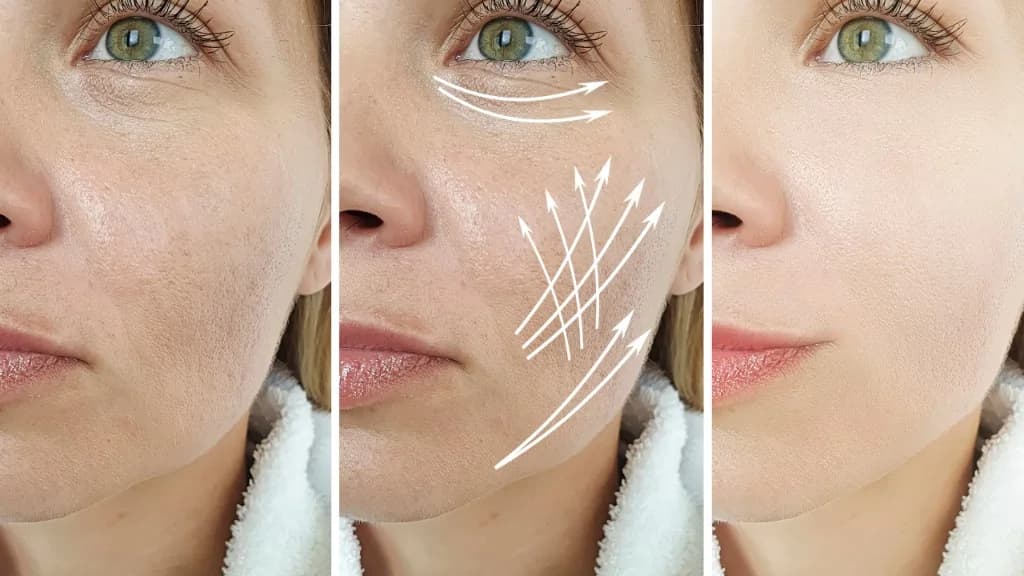
Orbicularis oculi wraps around the eye in a ring; it relates to blinking, squinting and fine lines. Thin skin and frequent expression make this area sensitive; aggressive pulling or heavy pressure is not recommended.
For the eye area, face yoga may use gentle circular movements, warming palms or very light touch. Stop on discomfort, redness or pain. The under-eyes focus page offers regional practice context.
Mid-face and cheeks
In the mid-face, zygomaticus major and zygomaticus minor support smiling and cheek elevation; buccinator flattens the cheek interior and holds food in place during chewing. These muscles relate to expressive vitality.
Cheek muscles in face yoga may be worked with gentle resistance and expression awareness. 'Balloon puffing' or prolonged holds may not suit everyone. The cheeks focus guide and cheek lift exercise offer regional examples.
Mouth and lip muscles
Orbicularis oris rings the lips; it plays a role in kissing, speech and lip pursing. Levator labii superioris raises the upper lip and is active in expressions near the nose. These muscles may relate to fine lines and perceived asymmetry.
Mouth-area exercises repeated excessively may cause fatigue or discomfort. Gentle O-shapes, soft lip closure and breath-led release are preferred. If you grind teeth or have jaw sensitivity, seek professional advice.
Jaw and neck muscles
Masseter is the chewing muscle; it is often linked to jawline perception and tension. Platysma covers the neck in a thin sheet; over time it is associated with neck lines and lower-face contour perception. This region is frequently worked in face yoga.
The 2018 JAMA program did not measure jaw and neck muscles separately; Face Yo presents this anatomy for awareness. Jawline, neck and jaw release exercise offer regional practice ideas. Pain or locking requires professional evaluation.
Face Yo approaches this topic as daily wellness practice; individual experiences may differ. Gentle pacing, controlled breathing and moving without straining the face are core principles.
Our content draws on peer-reviewed sources but does not replace medical advice. Stop if you feel discomfort and consult a professional when needed.
Regular short sessions may be more sustainable than intense infrequent practice. The Face Yo app helps you choose personal pacing and focus areas.
Our science pages do not list in-app exercises one-to-one; they provide conceptual framing. Use guided videos in the Face Yo app for practice.
Outcomes should be considered alongside personal skincare, sleep, sun exposure and general health habits. Face yoga alone is not a skin treatment.