
Face Area Guide
Nasolabial Folds
Mid-face smile lines and cheek support — guided awareness without aggressive claims.
Create a new care routine for your skin.
Bring face yoga, skincare and daily habits together in one app.
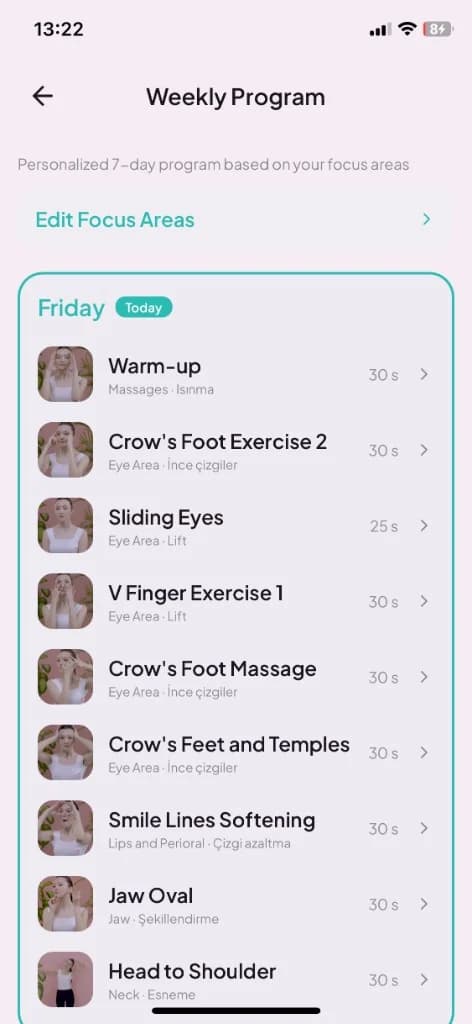

Area overview
Area overview
Nasolabial folds run from the nose sides toward the mouth corners. They are a normal part of facial expression and change with age, sun exposure and mid-face volume shifts.
Face yoga may support mid-face muscle awareness and expression control. It does not erase lines or replace injectable or surgical options.
Common appearance concerns
- Smile-line visibility
- Mid-face support
- Expression habits
- Cheek tone awareness
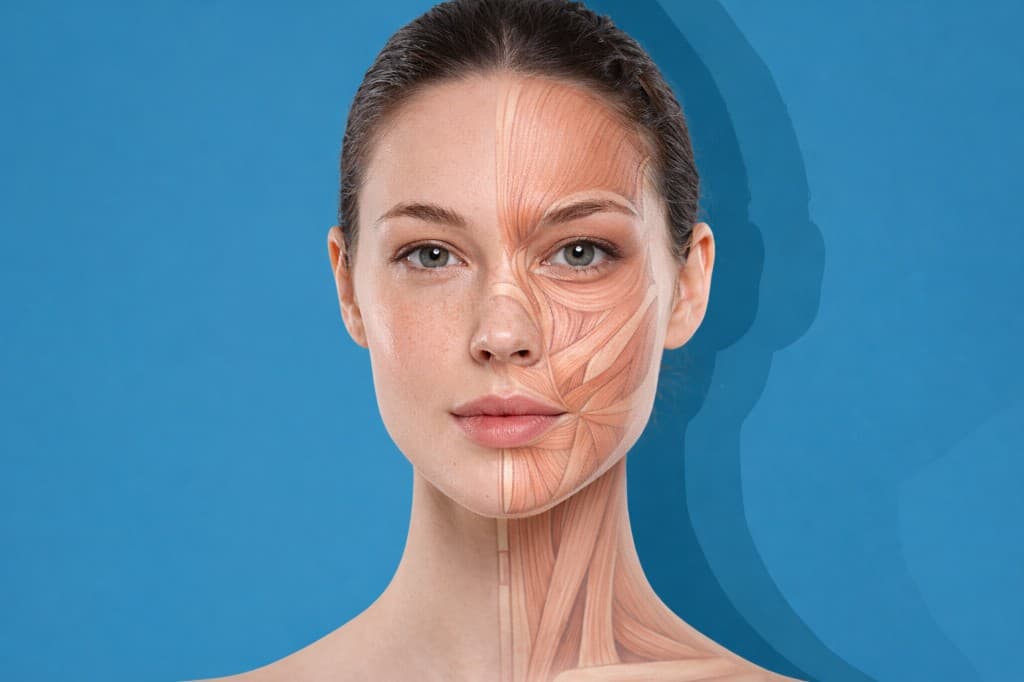
Muscles in this area
Muscles in this area
A simplified map of the muscle groups most often associated with this area, how they move and why Face Yo keeps the practice gentle.
Zygomaticus major
A cheek muscle that lifts the mouth corner when smiling.
Helps explain expression awareness and gentle release around the forehead, brows or eye area.
Levator labii superioris
Supports upper lip and mid-face movement.
Helps explain expression awareness and gentle release around the forehead, brows or eye area.
Cheek support area
Mid-face region shaping smile and cheek fullness.
Relates to facial balance, expression and controlled activation through the central face.
Anatomical and science references
References help explain the anatomy and the current limits of facial-exercise research. The guided lesson itself lives inside the Face Yo app.
Learn the anatomy here. Practice the guided lesson in the app.
Practice examples
Guided direction for this face area
These editorial visuals show how Face Yo guides muscle awareness and controlled movement in this zone. They illustrate practice direction—not guaranteed cosmetic outcomes.
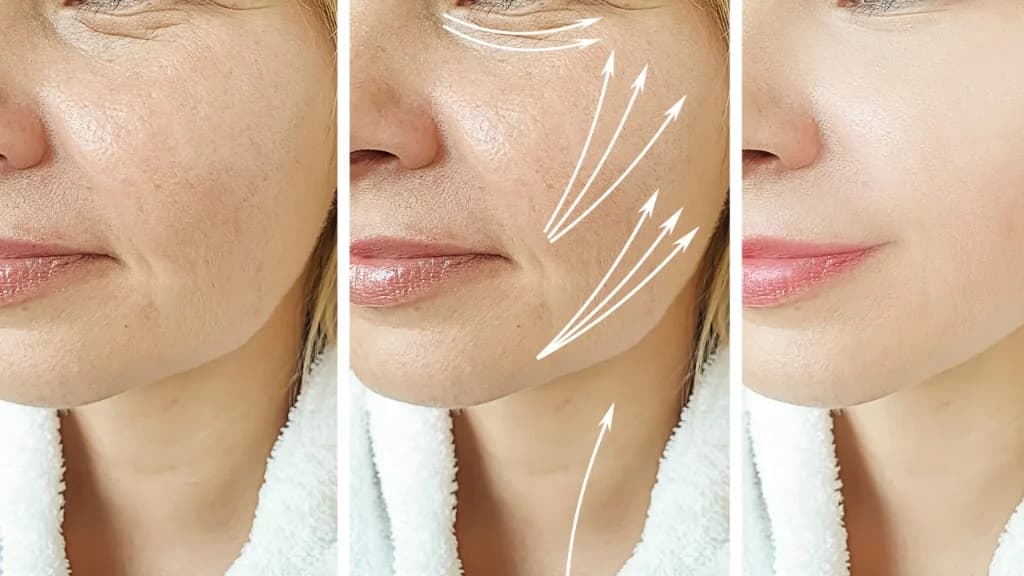
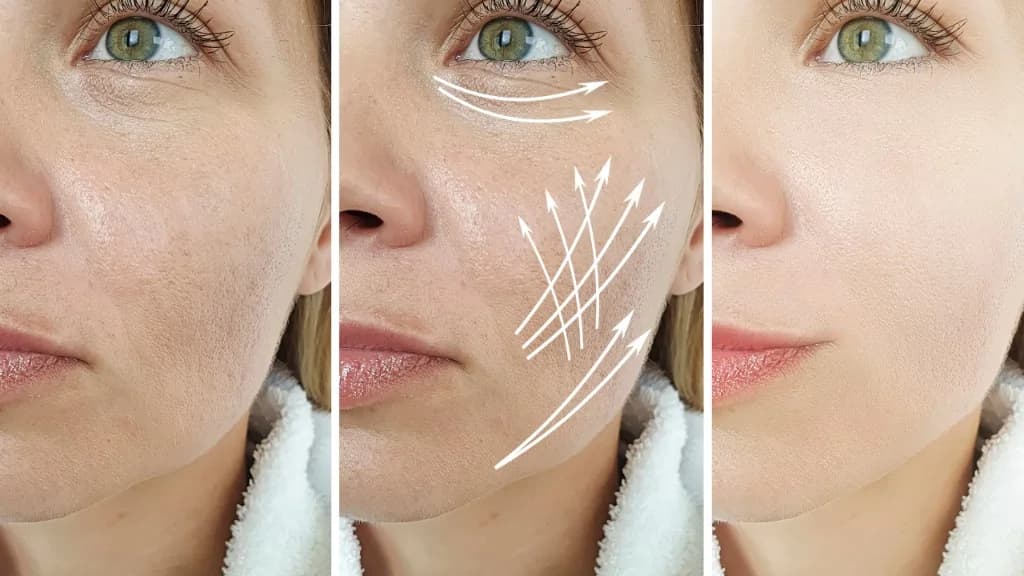
In Face Yo
Guided practice for this area
Choose your focus, follow short video sessions, and stay consistent with your weekly program — the same flow users see in the app.
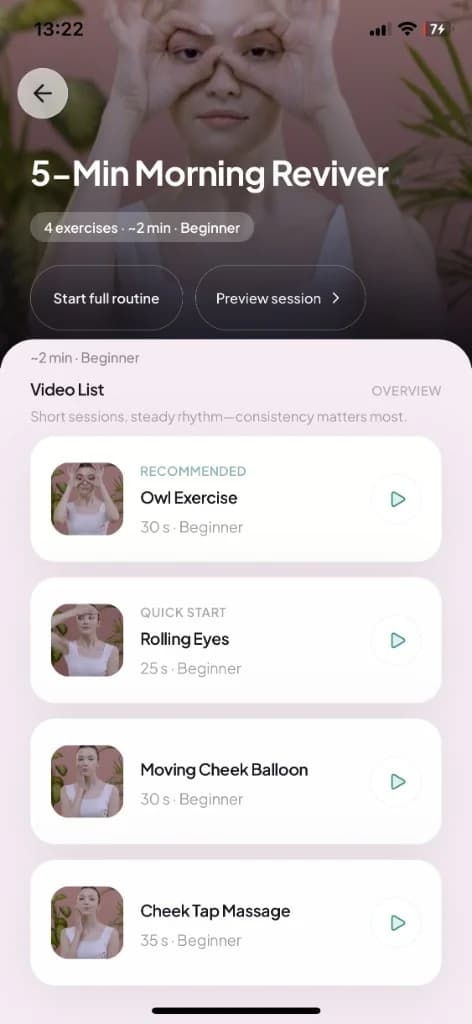
What to keep in mind
Expression patterns
Repeated smiling and mid-face movement shape this area over time.
Gentle activation
Controlled cheek work may support awareness without overworking skin.
Realistic framing
Lines are normal; wellness practice focuses on habit and muscle quality.
Related exercises
Cheek lift exercise
Explore Cheek lift exercise with Face Yo and continue with guided video routines inside the Face Yo app.
OpenFish face exercise
Explore Fish face exercise with Face Yo and continue with guided video routines inside the Face Yo app.
OpenJaw release exercise
Explore Jaw release exercise with Face Yo and continue with guided video routines inside the Face Yo app.
OpenRelated routines
Follow this routine step by step in Face Yo.
Cheek
Mid-face muscle activation and smile awareness. Follow the Cheek program with guided videos inside Face Yo.
Follow this routine step by step in Face Yo.Anti-Aging Yoga
Structured facial exercise for healthy-aging self-care. Follow the Anti-Aging Yoga program with guided videos inside Face Yo.
Follow this routine step by step in Face Yo.Face Firming Program
Overall face toning. Follow the Face Firming Program program with guided videos inside Face Yo.
Follow this routine step by step in Face Yo.Morning face yoga
A gentle morning activation ritual.
Follow this routine step by step in Face Yo.How Face Yo helps
How Face Yo helps
What science says
What science says
Research on facial exercises is still developing. Some studies suggest that structured facial exercise routines may support facial appearance in selected groups, but more research is needed. Face Yo presents face yoga as a wellness routine, not a medical or cosmetic treatment.
Association of Facial Exercise With the Appearance of Aging
Key finding: After a 20-week facial exercise program, some participants reported modest perceived fullness improvements.
Limitations: Very small sample, no control group — not generalizable.
Common mistakes to avoid
Pressing too hard instead of using a gentle touch
Expecting immediate visible change
Practicing inconsistently
Holding unnecessary tension in the face
Moving through exercises too quickly
A gentle note on safety
Frequently asked questions
What movement style is safest for the Nasolabial Folds?
Does posture matter when training the Nasolabial Folds?
How often should I train the Nasolabial Folds each week?
When should I pause Nasolabial Folds practice?
Make real time for your face.
Your personalized program, guided exercises and daily tracking tools in one app.
Start your guided routine for this area
Download Face Yo and follow personalized face yoga exercises step by step.
Selected lessons in EnglishSelected guided videos include English voiceover and subtitles in the app.
