FaceYo content is designed to support your daily face yoga and personal care routine. If you have a specific health condition, you may wish to consult your specialist before using the app.
Global research at a glance
- Northwestern University (USA) — *JAMA Dermatology*, 2018 — 20-week facial exercise program; modest improvements in perceived facial fullness (16 participants, no control group).
- Bandırma Onyedi Eylül University (Turkey) — *Medicina*, 2025 — 8 weeks of intensive face yoga; changes in facial muscle tone, stiffness and elasticity in middle-aged women (12 participants).
- Ümraniye Training and Research Hospital (Turkey) — *American Journal of Otolaryngology*, 2026 — Face yoga may lower postoperative swelling and bruising scores by day 14 (70 patients).
- Japan (university students) — *Journal of Health Evaluation and Promotion*, 2025 — 8 weeks of face yoga may increase oral mucosal moisture (20 young women).
Evidence remains limited; results vary and face yoga is not medical treatment.
Research landscape
Peer-reviewed publications on facial exercises are not as extensive as those on skincare or surgical interventions. The literature consists mostly of small observational studies, short interventions and self-reported measures. Face Yo therefore presents research as a careful learning area, not a proven miracle.
Research gaps support positioning face yoga as daily wellness practice: movement awareness, tension management and sustainable habit. These goals do not require medical outcome promises.
The 2018 JAMA study
Murad et al.'s JAMA Dermatology study (PMID 29926033) followed 16 adults through a 20-week facial exercise program. Participants and blinded assessors reported modest improvements in perceived facial fullness at the end.
This study is often cited because it addresses facial exercise directly in a recognized journal. Alone it does not constitute definitive proof; larger controlled replications are needed.
Methodological limits
The sample was very small, there was no control group and participants volunteered. Outcomes relied on self-report and visual assessment with limited long-term follow-up. These limits mean findings are not universal.
Daily practice context
Research outcomes may not map one-to-one to short guided sessions in Face Yo. The app offers different durations, focus areas and pacing. Consistency, gentle contact and stopping on discomfort matter most.
For more context see facial muscles and skin elasticity.
Realistic expectations
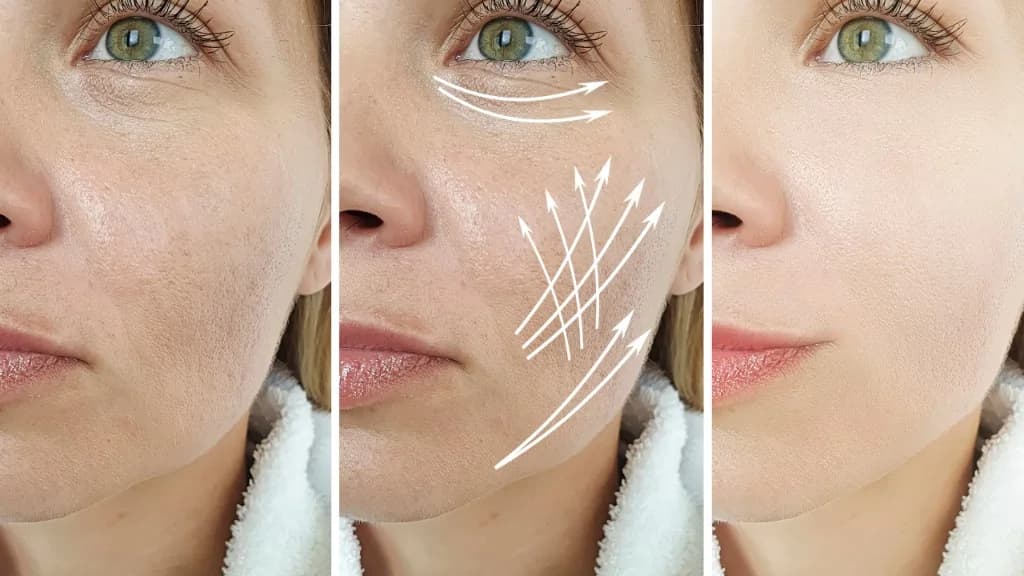
Face yoga does not promise to 'eliminate wrinkles.' Some studies suggest regular muscle activation may support awareness and perceived vitality; evidence is limited. Personal results vary by age, skin type and habits.
Face Yo approaches this topic as daily wellness practice; individual experiences may differ. Gentle pacing, controlled breathing and moving without straining the face are core principles.
Our content draws on peer-reviewed sources but does not replace medical advice. Stop if you feel discomfort and consult a professional when needed.
Regular short sessions may be more sustainable than intense infrequent practice. The Face Yo app helps you choose personal pacing and focus areas.
Our science pages do not list in-app exercises one-to-one; they provide conceptual framing. Use guided videos in the Face Yo app for practice.
Outcomes should be considered alongside personal skincare, sleep, sun exposure and general health habits. Face yoga alone is not a skin treatment.