FaceYo content is designed to support your daily face yoga and personal care routine. If you have a specific health condition, you may wish to consult your specialist before using the app.
Your thirties are a practical time to shift from quick fixes toward habits you can keep for years. Face yoga in your 30s fits that mindset: thoughtful skincare, sun protection, steady sleep, and adding face yoga to your day can support a more balanced approach to how you care for your face and neck.
Facial appearance is not shaped by age alone. Genetics, expressions, sun exposure, sleep, stress, and daily posture all influence how your face may look over time.
Face yoga does not stop aging, remove wrinkles with certainty, or change bone structure. With controlled movement, it may help you use facial muscles more consciously, notice tension, and build a regular movement ritual into personal care.
Why Practice Face Yoga in Your 30s?
In your thirties, the point of face yoga is usually not to train the face harder or faster. It is to notice how you use the face and neck during ordinary life and to build a sustainable routine that does not strain the skin.
Long hours at a screen, unconscious frowning, jaw clenching, or carrying the head forward can contribute to tightness in the face and neck.
A balanced routine may focus on releasing neck and shoulders, noticing jaw-clenching, moving the cheeks with control, easing the eye area, reducing forehead tension, and pairing breath with movement.
If you are new, the what is face yoga? overview and our face yoga for beginners routine offer a gentle starting frame.
What Is the Skin Longevity Approach?
Skin longevity is a care mindset aimed at supporting the skin’s natural functions and healthy appearance over the long term—not at trying to halt aging entirely. It emphasizes repeatable daily habits rather than one miracle product or exercise. Our skin longevity guide explains this perspective in more detail. Face yoga is one supportive piece of that picture, not the whole plan.
1. Begin by Relaxing Neck and Shoulders
You do not have to start face yoga with intense facial contractions. When shoulders and neck stay tight, facial exercises can trigger extra gripping elsewhere. Let the shoulders drop, balance the head over the spine, and take a few slow breaths without forcing the neck. One minute of awareness is enough for a first session.
2. Focus on Control, Not Force, Along the Jawline
Jawline work is among the most popular topics in face yoga. The jawline face yoga article approaches this area with a calm, measured tempo.
When you practice jawline awareness, do not press the teeth together, thrust the chin forward, or create excessive tension at the front of the neck. Keep movements small; stop if the jaw joint hurts or clicks.
Face yoga does not reshape the jawbone. A realistic aim is to support posture and awareness of how you hold the lower face.
3. Keep the Rest of the Face Soft During Cheek Work
During cheek exercises, try to activate only the area you intend to train. When you create a light smile, avoid squinting, lifting the brows, or pulling the mouth tight.
After a short hold, release the whole face. Notice the difference between effort and ease.
4. Do Not Pull the Skin Around the Eyes
The eye area is thin and sensitive. The same gentle principle applies to routines aimed at under-eye puffiness and tired-looking eyes.
While working near the eyes, wash your hands first, use very light fingertip contact, open and close the eyes without straining, and avoid rubbing or dragging the skin.
If you have irritation, sensitivity, or a medical concern in this area, seek professional guidance before practicing.
5. Notice Tension in the Forehead and Brows
While reading or concentrating, the forehead can tighten without you realizing it. Forehead tension exercises can support awareness in this zone.
Keep the brows in a natural position. Soften the eyes and jaw. Use a few slow breaths to feel whether the forehead is still holding on.
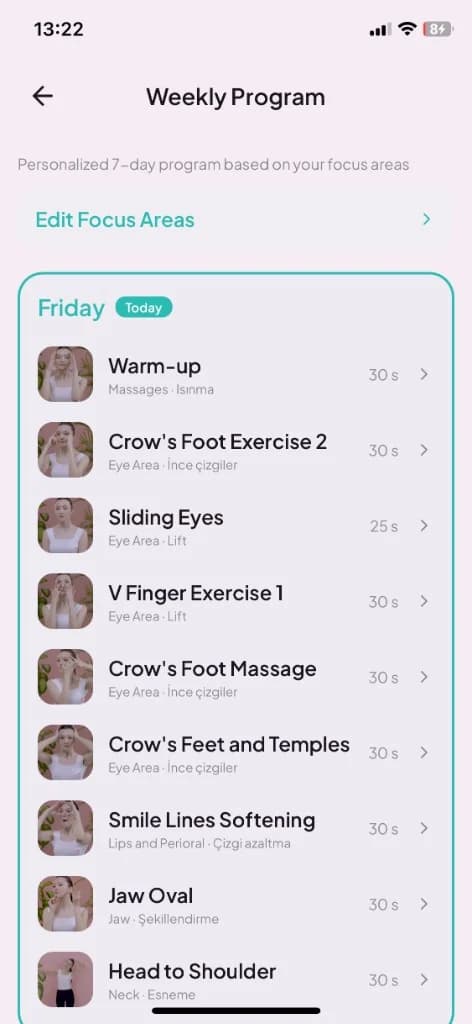
A 7-Minute Daily Face Yoga Routine for Your 30s
A short daily plan for your thirties might look like this:
- One minute to release neck and shoulders
- One minute to check posture and head position
- Two minutes for jawline and neck awareness
- One minute for controlled cheek movement
- One minute to gently ease the eye area
- One minute on forehead, brows, and breath
When time is tight, a five-minute face yoga plan follows a similar skeleton.
Morning or Evening?
A morning face yoga routine can open the day with light movement. Before-sleep face yoga may help you notice tension that built up during the day. The best time is whenever you can practice calmly and consistently.
Combining Face Yoga With Skincare
Face yoga does not replace cleansing, moisturizing, or sun protection. When you combine movement with skincare, keep hands clean, avoid unnecessary friction, and pause if the skin feels irritated.
Common Mistakes to Avoid
In your thirties, it is tempting to intensify face yoga hoping for faster change. Pulling the skin, clenching the jaw all day, continuing through pain, or expecting permanent results within a few days works against long-term success. Treat face yoga as steady care, not a sprint.
Conclusion
Face yoga in your 30s works best when it rests on consistency and long-term habits. As your needs shift, a face yoga in your 40s guide explores how tempo and focus may change.
With Face Yo, you can explore guided sessions that fit your schedule.